
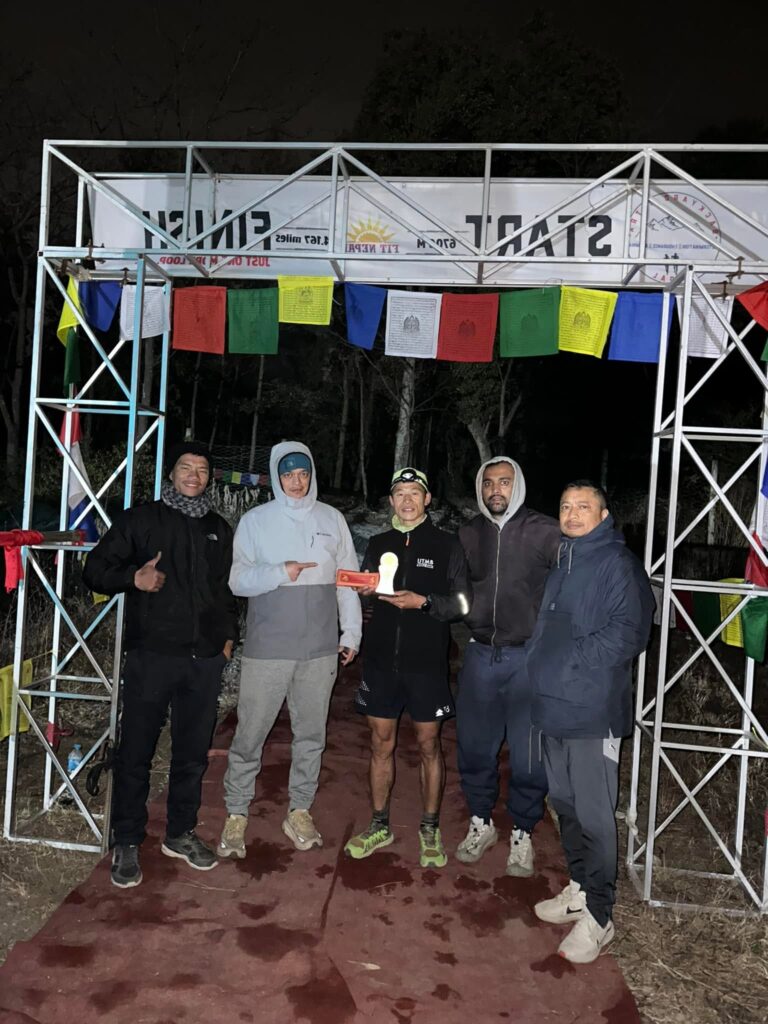
Backyard ULTRA Nepal began with a vision: give runners in Nepal a platform to explore their endurance and build a team capable of representing the country internationally.
Since its introduction to Nepal by Rajiv Shrestha on January 25, 2025, the event has brought determined runners together, produced national milestones, and created a pathway toward the Backyard Ultra World Championships.
Every hour and every completed loop has been part of that journey.
Who Founded Backyard Ultra, and How Does It Work?
Backyard Ultra was created by Gary “Lazarus Lake” Cantrell, who first held Big’s Backyard Ultra in Tennessee, USA, in 2011. The format has since spread worldwide. Background on Backyard Ultra
The challenge is simple to understand—and increasingly difficult to sustain:
- Runners complete a 6.706-kilometre loop, also called a “yard,” every hour.
- A new loop starts exactly on the hour. Every remaining runner must start on time and finish before the next hour begins.
- Any remaining time is available for eating, resting, and preparing for the next start.
- There is no predetermined finishing distance or duration.
- The winner must complete one more loop than every other runner. If nobody completes that final loop, there is no winner.
Completing 24 loops means covering 100 miles—approximately 160.9 kilometres—in 24 hours. The final competitor supporting the winner’s performance is commonly called the “assist.” Format and terminology
That relationship makes this event special: runners compete against each other, but they also need each other to keep the race going.
The People Behind Backyard ULTRA Nepal
Since the beginning, many people have contributed their time, energy, and support to keep Backyard ULTRA Nepal going and make it accessible to Nepal’s runners.
Manish Tamang, Jeetesh Pradhan, Mukesh Khatri, Eshwore Gurung, Hassan Gurung, Roshan Gurung, and Diwakar Budha Magar, alongside many others, have played an integral role in making these events possible.
The growth of Backyard ULTRA Nepal reflects this collective effort. Behind every starting line are people helping runners get the opportunity to discover how far they can go.
Backyard ULTRA Nepal 1.0: The Beginning
The first Backyard ULTRA Nepal took place on January 25, 2025, introducing this endurance format to Nepal through Rajiv Shrestha’s initiative.
Arjun Kulung Rai became the inaugural Last One Standing, completing 21 loops and winning NPR 100,000—one lakh rupees.
Ramesh Limbu completed 20 loops, earning the assist.
The inaugural event was supported by Speed Energy Industries and Aqua Water Distributors, whose sponsorship helped make this first chapter possible.
This opening event established the foundation for a larger ambition: developing runners who could represent Nepal in international backyard competition.
Backyard ULTRA Nepal 2.0: Rewarding More Performers
The second edition took place on June 14, 2025, with sponsorship from Trekkers Cafe in Pokhara.
For Backyard ULTRA Nepal 2.0, the prize structure was changed to spread rewards across more strong performances:
| Prize | Amount |
|---|---|
| Last One Standing | NPR 30,000 |
| Gender-category prize | NPR 20,000 |
| Additional top-five performance awards | NPR 3,000 each |
A minimum of 12 completed loops was required for the top prize. The same runner could not claim both the Last One Standing prize and the gender-category prize.
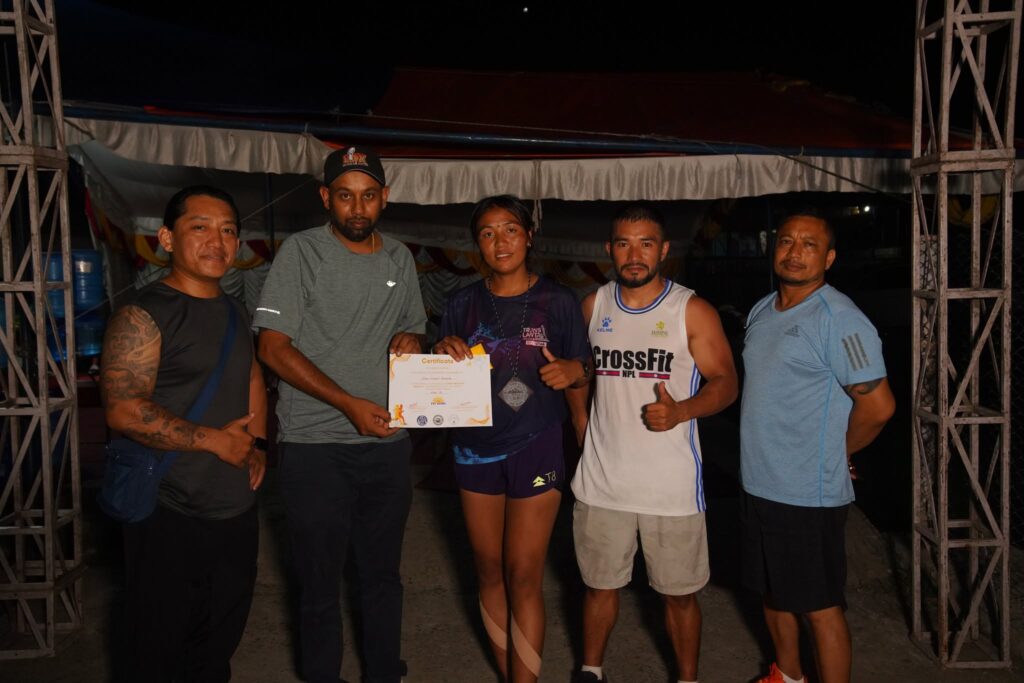
Bijaya Rana Magar became the Last One Standing with 25 loops, assisted by Milan Kulung Rai, who completed 24 loops.
Among the women, Kumari P. Sunuwar completed 12 loops and received the NPR 20,000 gender-category prize.
The event raised the standard of performance while recognizing achievement beyond the overall winner.
Backyard ULTRA Nepal 3.0: Raising the Target to 24 Loops
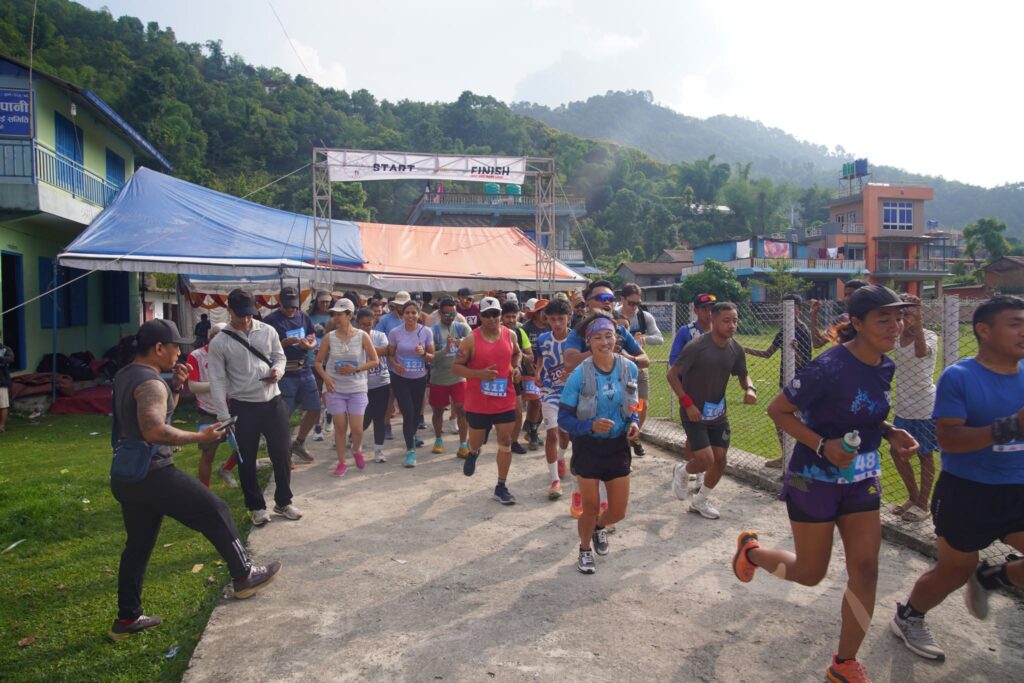
Backyard ULTRA Nepal 3.0 took place on August 15, 2026, retaining the prize structure introduced in the second edition.
This edition had no sponsor. It was successfully organized and self-funded through Fit Nepal and RunUKU—an initiative of Ultra Trails Nepal, with the continued contribution of the people supporting the event.
One significant change was made: the minimum requirement for the top prize increased to 24 completed loops.
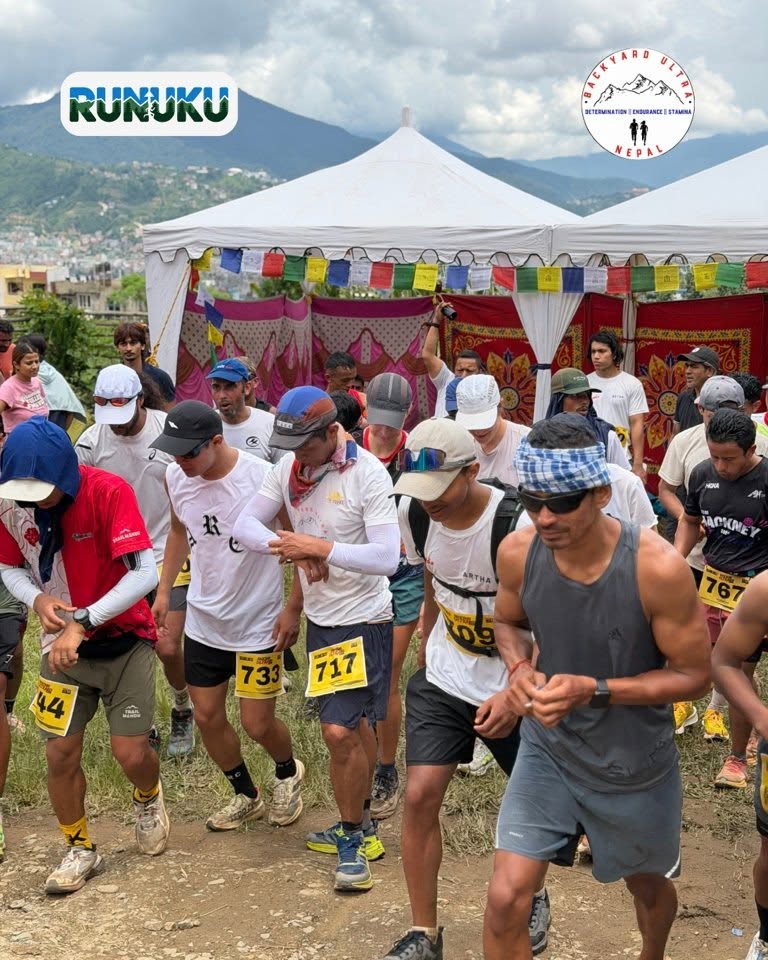
There was a clear purpose behind this decision. Nepal needed 15 runners for its team at the Backyard Ultra Team World Championship on October 17, 2026. Encouraging more runners to reach 24 loops was part of preparing a stronger national squad.
From the first event in January 2025 through the third edition in August 2026, these races were organized with Team Nepal selection and development in mind. The 24-loop prize threshold was a local incentive to support that goal.
Arjun’s Performance: Why 33 Loops Means an Official Result of 30
The third edition delivered a new milestone for Nepal through Arjun Kulung Rai.
Arjun completed 33 loops in total, but his official competition result and national record stand at 30 loops.
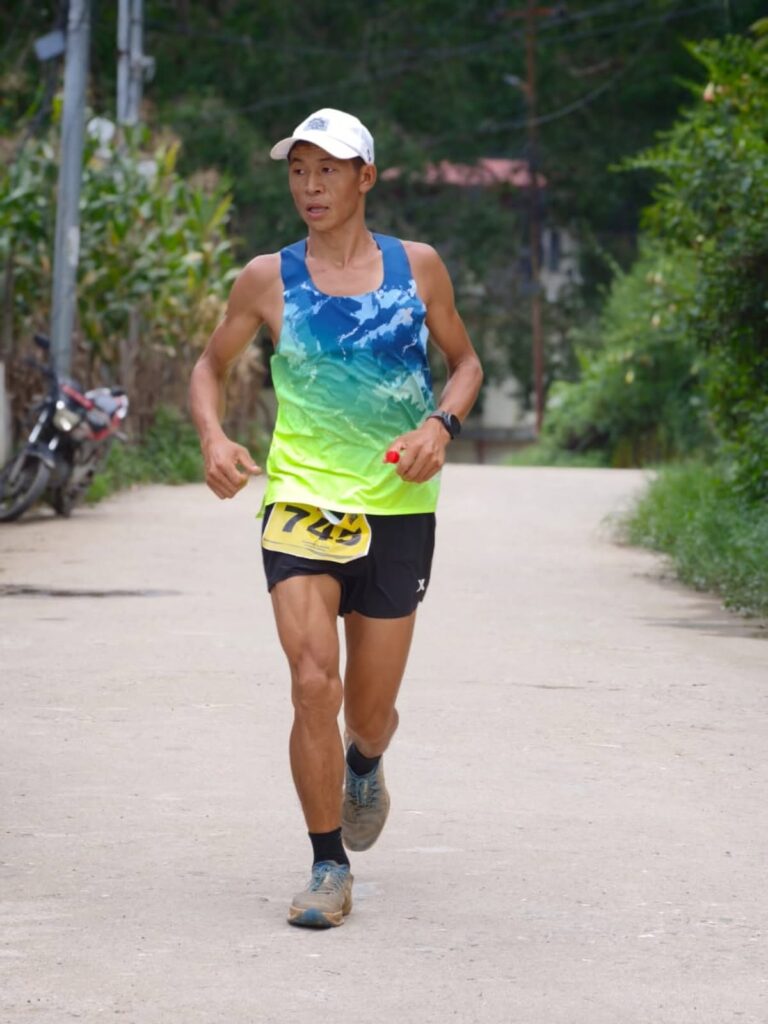
The distinction comes from the way a backyard ultra ends. Once only one runner successfully completes a loop and no other competitor remains eligible to continue, the race is over. Additional running after that point does not increase the official result. Explanation of the final-loop rule
At Backyard ULTRA Nepal 3.0, Bijaya Rana Magar completed 29 loops before withdrawing during loop 30. Arjun successfully completed that 30th loop, becoming the Last One Standing, with Bijaya earning the assist.
Arjun continued for three additional loops, demonstrating his determination and endurance. Those loops were beyond the completed competition, so his official result remains 30 loops.
Manju Sunuwar Sets a New Women’s Milestone
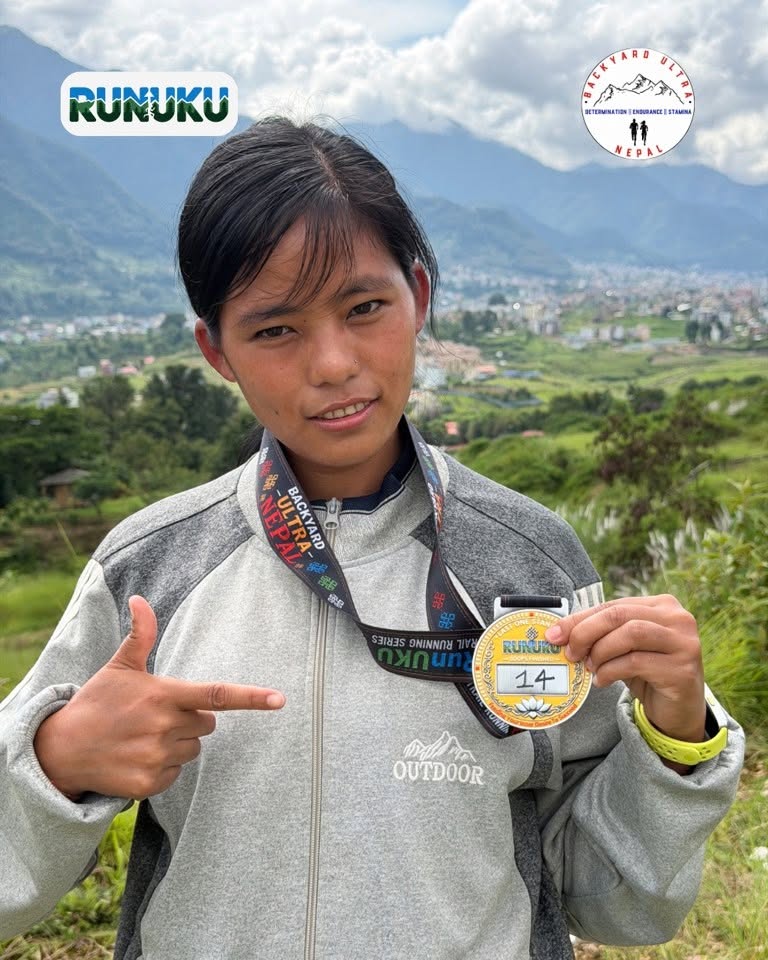
The third edition also saw Manju Sunuwar complete 14 loops, surpassing Kumari P. Sunuwar’s previous 12-loop mark.
Manju became the first Nepali woman to complete 14 loops in a backyard ultra, setting a new national women’s record.
Her achievement adds another important chapter to the event’s growth and gives more women a benchmark to pursue.
Team Nepal and the 2026 World Championship
The next major step is the Backyard Ultra Team World Championship on October 17, 2026. Nepal’s runners will compete from home while national teams around the world run in their respective countries.
After the qualifying period, the following 15 runners are listed for Team Nepal on the official championship roster. Names appear below as published:
| Runner | Best qualifying performance |
|---|---|
| Hem Rana | 31 loops |
| Arjun Kulung Rai | 30 loops |
| Bijaya Rana Magar | 29 loops |
| Milan Kulung | 24 loops |
| Shakti Ram Roka | 24 loops |
| Ramesh Limbu | 20 loops |
| Pancha Ram Budha | 19 loops |
| Keshav Budha | 17 loops |
| Prince Tamang | 17 loops |
| Goopal Tamang | 16 loops |
| Sudhir Parajuli | 15 loops |
| Safal Lama | 15 loops |
| Baram Ashok | 14 loops |
| Manju Sunuwar | 14 loops |
| Ranjit Rai | 14 loops |
The roster also lists six reserve runners: Diwakar Budha Magar, Harendra Kumar Chaudharu, Ashok Gurung, Lokendra Rai, Subed Shakya, and Kumari P. Sunuwar. View the official Team Nepal roster
Their selection marks an important milestone for Backyard ULTRA Nepal. The ambition that began with the first event has grown into a national team preparing to take its place on the world stage.
Alongside the team competition, Nepal’s runners will compete for the national Last One Standing title. That runner will have the opportunity to participate in the 2027 Individual Backyard Ultra World Championship in Tennessee, USA, with the exact event date to be confirmed.
One team. One nation. Every loop counts.
Looking Ahead: Backyard ULTRA Nepal 4.0 – Pokhara Aviram
The Team World Championship and Individual World Championship each take place every two years, alternating between team and individual editions.
While preparations continue for 2026, we are already looking toward Team Nepal’s 2028 selection.
With the next qualification cycle underway, Backyard ULTRA Nepal 4.0 – Pokhara Aviram will take place on October 3, 2026. It will be Nepal’s first event in this new selection journey toward the 2028 team championship.
This gives runners an early opportunity to build experience, improve their performances, and begin working toward a place on the future national team.
More events will follow, creating further opportunities for runners across Nepal to discover what they can achieve.
The Journey Continues
From Arjun’s 21-loop victory at the inaugural event to stronger performances, new women’s records, and a 15-runner national team, Backyard ULTRA Nepal continues to grow.
This progress belongs to the runners, contributors, sponsors, and everyone who has helped keep the events going. Their support has turned an idea into an opportunity for Nepal’s endurance-running community.
Our hope is to see more runners join this journey—and to see athletes from Nepal stand alongside the best backyard runners in the world.
Every runner who returns to the starting line helps move that ambition forward.
One more loop. One more possibility. The journey continues.